What an implant crown adds to a new tooth
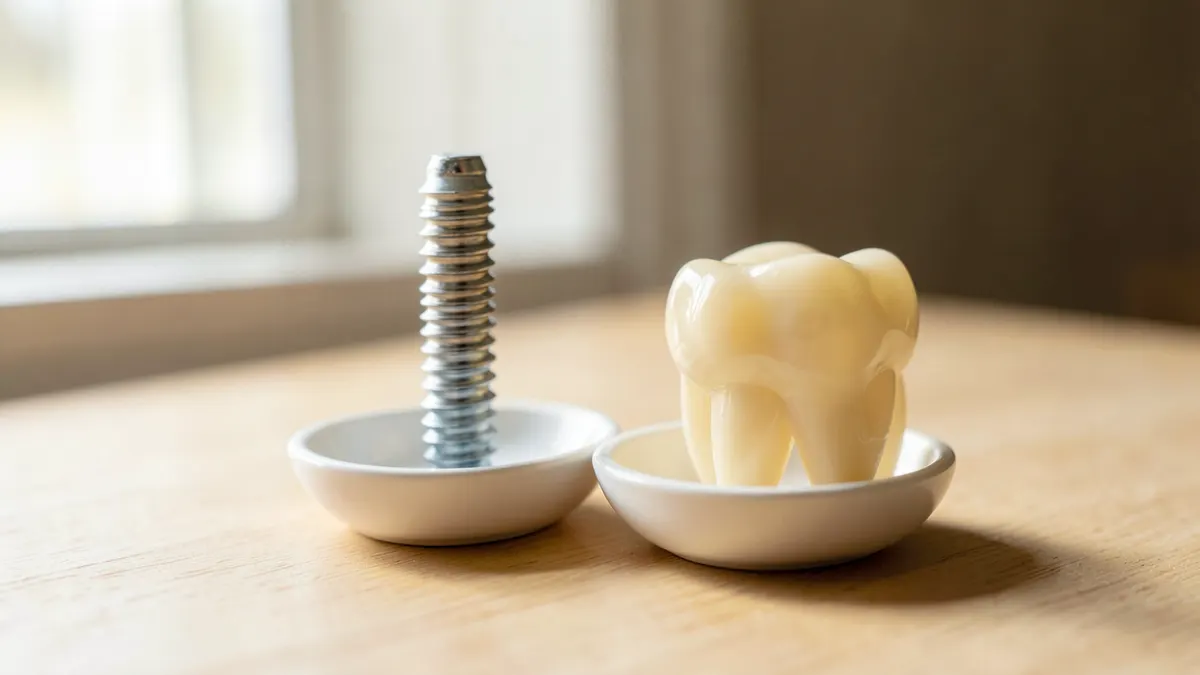
People talk about "getting an implant" as if it were one object. It is really three parts working together, and the last one is the part everyone sees.
The three parts
A small titanium post goes into the jawbone and takes the place of the tooth root. On top of it sits a connector called an abutment. The crown, made of ceramic or a similar material, attaches to that connector and replaces the visible tooth.
Think of a flagpole. The post is the pole set in concrete, and the crown is the flag. A strong pole with a worn flag still looks wrong, and the reverse is just as true.
Why the crown takes planning
A crown has to meet your bite, match its neighbors and sit at the right height against the gum. A tooth that is slightly too tall chips; one that is too short leaves a gap where food collects. Color matters too. Natural teeth carry subtle shades and a touch of translucency near the edge, and a good crown copies that.
Your dentist checks how your top and bottom teeth meet before the final fit. A few minutes of adjustment at this stage can prevent soreness later.
What the visits look like
- Exam and imaging to check bone, gum health and spacing.
- Placement of the implant post, followed by a healing period while bone grows around it.
- Attachment of the abutment, then impressions or a digital scan of your teeth.
- Fitting of the crown, with small bite adjustments before it is secured.
Healing time varies from person to person. Smoking, diabetes control and bone density all play a part, which is why a personal exam beats any general timeline.
Screw held or cemented
Some crowns are screwed to the implant and others are cemented. Screw held crowns can be removed later for repair without damage. Cemented ones can look cleaner in certain spots because there is no screw channel. Your dentist picks based on where the tooth sits and how it will be used.
Caring for it at home
The crown will not decay, but the tissue around it can become inflamed. Brush twice a day, clean between the teeth every day and use a floss threader or a small interdental brush near the implant. Skip the habit of chewing ice or opening packages with your teeth.
Keep your checkups on schedule. Your dentist can spot early gum trouble around an implant before you feel anything.
When the crown wears or breaks
Crowns take years of chewing and can chip or loosen. When that happens the implant post below is often fine, and only the crown needs repair or replacement. If you have an older implant with a worn crown, that repair is a common visit. Our team handles implant restoration in Boca Raton, including crown work on existing implants.
Is it right for you?
Implants suit many adults with a missing tooth, though not everyone. Active gum disease should be treated first, and thin bone may call for a graft. An exam and imaging answer the question, and we explain options without pressure.
Matching the crown to the neighbors
Your dentist takes a shade reading in natural light, since office lighting can fool the eye. Ask to see the crown beside your other teeth before it is secured. Small changes to shape, length or surface texture are easy at this point and hard afterward.
Tell the team about any grinding habit. A night guard can protect both the crown and the teeth that sit next to it.
Questions patients ask
How long after surgery do I get the crown?
It depends on how your bone heals and which plan your dentist chooses. Many patients wait a few months, but your own timeline comes from your exam.
Can an implant crown get a cavity?
The crown itself cannot decay, but the gum and bone around it can still get infected. Brushing, flossing and regular checkups protect the implant.
If you are thinking about replacing a tooth, call (561) 338-6411 or book online for a consultation.
This article is general information, not a diagnosis. Call us to talk about your own teeth.