Dental Implants and Dentures in Boca Raton

Replace one tooth, a few, or a full arch. Implants, All-on-4, implant-supported dentures, and dentures that fit, all planned around your mouth and your budget.

Dental implants, explained

A dental implant is a small titanium post placed in the jawbone to act as a new tooth root. Once it heals and bonds with the bone, it holds a crown, a bridge, or a denture. A bridge leans on the teeth beside the gap and a denture rests on the gums, but an implant stands on its own.

A missing tooth matters more than it looks. Neighboring teeth drift into the space, your bite shifts, and the bone that held the root slowly shrinks. Replacing the tooth sooner usually keeps more of your options open.

Most adults with healthy gums and enough jawbone can get implants, and age alone is rarely the deciding factor once the jaw has finished growing. At your consultation we look at:

  • Gum health, and any gum disease to treat first
  • Bone height and width, checked on digital X-rays
  • Health conditions and medicines that affect healing
  • Smoking, which slows healing around an implant
  • Your bite, and whether crowded teeth need attention first
Book an Implant Consultation

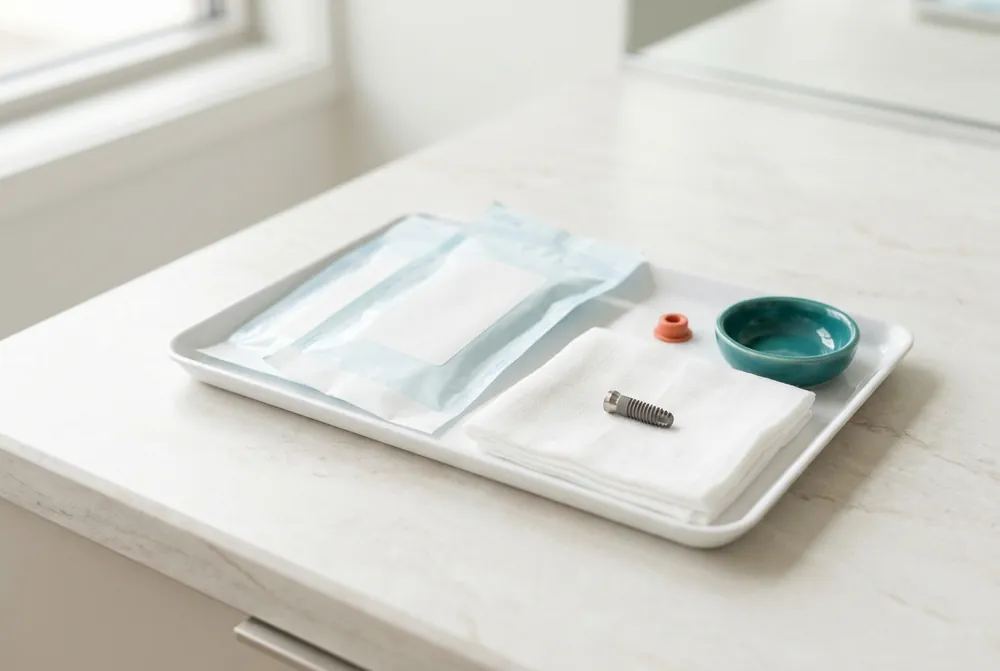
Sterile instrument pouches and a small titanium implant screw on gauze, on a white tray beside a teal dish

Implant, bridge or denture

The right replacement depends on how many teeth are missing, where they are, and how much bone is left.

One missing tooth

An implant with a single crown is the closest thing to the tooth you lost, and the teeth beside it stay untouched. The other routes are a dental bridge or a small partial denture on a metal or acrylic base. A partial costs less, but it comes out for cleaning and can feel bulky.

Crowns and bridges

Several teeth

Two implants can carry a bridge across a wider gap. A removable partial denture clips to your remaining teeth and is a sensible choice for missing back teeth when you want to chew on both sides again without surgery. If the gaps are scattered, we may mix approaches.

Partial dentures

A full arch

Complete dentures replace every tooth on the upper or lower jaw. Implant-supported dentures and All-on-4 anchor that full row to implants, so it stays put when you eat and talk.

Full-arch options

The implant process

Most implant treatment takes a few months from the first visit to the final tooth, mostly because bone needs time to heal.

  1. Consultation and planning

    We examine your mouth, take digital X-rays, and talk through your goals. Bring your questions: how many implants you need, how long each phase takes, and what the total cost includes. HSA funds can go toward your dental care here.

  2. Preparing the site

    A damaged tooth that cannot be saved comes out first. If the bone is thin, a graft rebuilds it. Some patients go straight to placement; others heal for a few months before the next step.

  3. Placing the implant

    With local anesthetic, the post is set into the jawbone and the gum is closed around it. Most people describe pressure rather than sharp pain, and many feel ready for normal routines within a day or two.

  4. Healing

    Over the next few months, bone grows around the implant and locks it in place. You may wear a temporary tooth or denture so the gap is not on show while you heal.

  5. Your final tooth

    A connector called an abutment joins the implant to your custom crown, bridge, or denture. We check your bite, make fine adjustments, and set a schedule for follow-up visits and cleanings.

The first days after surgery

Expect some swelling and tenderness for a few days. Eat soft, cool foods, chew on the other side, and skip straws and smoking while the site heals. Keep the area clean with the gentle rinses we recommend. Call us if bleeding, swelling, or pain gets worse instead of better.

Bone grafts and mini implants

Bone needs a job. Once a tooth is gone, the jaw in that spot slowly thins, and after a few years there may not be enough left to hold a standard implant. A bone graft rebuilds that volume. Graft material goes where the bone is thin, and over several months your body replaces it with bone of its own. It adds time to treatment, and it gives the implant a much firmer foundation.

If a tooth has to come out, a socket preservation graft placed the same day can limit bone loss and make a later implant simpler. And if a graft is not right for you, mini implants or angled All-on-4 implants can sometimes work with the bone you already have.

Standard implants and mini implants, side by side
FeatureStandard implantMini implant
Post sizeFull widthNarrower post
Bone neededEnough height and width, sometimes after a graftLess bone, often no graft
ProcedureGum is opened, then a healing period before the final toothSmaller procedure with a shorter recovery
Best suited toSingle teeth, bridges, full arches, back teethSteadying a lower denture, small front teeth
Bite forceHandles heavy chewingLess suited to back teeth that take heavy force

Full-arch options: All-on-4 and implant dentures

If you are missing most of your teeth, or the ones you have cannot be saved, you do not need an implant for every tooth. A handful of well-placed implants can hold a whole arch.

All-on-4

Four implants carry a fixed bridge of replacement teeth. The back two are angled to use the strongest bone, which can help some patients avoid a graft. The bridge stays in. You brush and clean around it much like natural teeth, and regular visits let us check the implants and gums.

Implant-supported dentures

A denture that clips onto two or more implants, either with small ball-style attachments or a slim bar. It stays put while you eat and talk, and many versions still come out for cleaning. Because it no longer relies on suction, an upper denture can often leave the palate open.

Whichever you choose, expect a short adjustment period while your speech and chewing get used to the new teeth.

Ask About Full-Arch Options

Dentures that fit

Dentures are still the right answer for many people, and a good fit makes all the difference.

Your first weeks with new dentures

Getting used to them

  • Start with soft foods cut small: eggs, yogurt, fish, cooked vegetables.
  • Chew on both sides at once to keep the denture steady.
  • Read aloud to retrain your tongue and lips. Most speech changes fade within a few weeks.
  • Extra saliva is normal at first and settles as your mouth adjusts.
  • Sore spots can be fixed. Call us for an adjustment instead of waiting it out.

Daily care

  • Rinse after meals and brush once a day with a soft brush.
  • Soak overnight, and never let a denture dry out.
  • No bleach, whitening toothpaste, or hot water.
  • Keep up regular checkups so we can check your gums and the fit.

Who you will see

Dr. Joshua Etman, DDS, general dentist at Boca Dental Group

Dr. Joshua Etman

General Dentist

Dr. Etman earned his DDS at NYU College of Dentistry and completed a General Practice Residency at St. Luke’s Roosevelt Hospital in New York City. He keeps up with continuing education in interactive implant surgery, endodontics, and Invisalign.

What are the benefits of dental implants?

An implant replaces the root as well as the visible tooth, so it stands on its own without reshaping the teeth beside it. It holds firm when you bite and speak, and it gives the jawbone a reason to stay. Many patients find implants feel closer to natural teeth than any removable option. With good home care and regular checkups, an implant can serve you for many years.

What is the process of getting dental implants?

It starts with a consultation: an exam, digital X-rays, and a talk about your goals. If the bone is thin, a graft may come first. Next, a small titanium post is placed in the jaw and left to heal and bond with the bone, often for a few months. Last, a connector called an abutment and your custom crown, bridge, or denture are attached.

What are All-on-4 dental implants?

All-on-4 replaces a full upper or lower arch of teeth using four implants. Two go toward the front of the jaw and two farther back, angled to make the most of the bone you have. A fixed bridge of replacement teeth attaches to all four. You do not take it out at night; you clean it in place and come in for regular checkups.

Am I a suitable candidate for All-on-4?

Good candidates are missing most or all of the teeth in one arch, or have teeth that cannot be saved, and are healthy enough for minor oral surgery. Because the back implants are angled, All-on-4 can sometimes work where bone is too thin for other implant plans. Smoking, uncontrolled diabetes, and gum disease can affect healing, so we review your health history at the consultation.

What is the difference between dentures and implants?

A conventional denture rests on your gums and is held by suction, clasps, or adhesive. You take it out to clean it and to sleep. An implant is anchored in the jawbone, so it does not shift when you chew. Dentures cost less up front and need no surgery, while implants feel more like natural teeth. Implant-supported dentures blend the two: a denture that clips onto implants.

How do I clean my dentures?

Take the denture out and rinse it after meals. Once a day, brush every surface with a soft brush and a non-abrasive denture cleaner, then soak it overnight in water or a soaking solution. Skip regular toothpaste, bleach, and hot water, which can scratch or warp it. Brush your gums, tongue, and any natural teeth too. Clean it over a folded towel in case it slips.

Can I sleep in my dentures?

In most cases, take them out at night. Hours without dentures give your gums a rest and let saliva rinse the tissue, which lowers the chance of irritation and infection. Keep the denture in water or a soaking solution so it does not dry out and lose its shape. The exception is the first day or so after extractions with immediate dentures, when we may ask you to leave them in.

My dentures seem loose; what should I do?

Call us. Gums and bone change shape over time, especially after extractions, so a denture that fit well last year can loosen. Do not bend it or glue it yourself, because home repairs can damage it beyond repair and hurt your gums. Often a reline, which adds new material to the fitting surface, restores the fit. If the base is worn, a rebase or a new denture may make more sense.

How many teeth can a dental implant replace?

One implant can hold a single crown. Two implants can support a bridge that spans three or four teeth. For a full arch, as few as four implants can hold an entire row of replacement teeth, which is the idea behind All-on-4. The right number depends on where the gaps are, how much bone you have, and whether you want a fixed or removable result.

How much do dental implants cost?

The cost depends on how many teeth you are replacing, whether you need a bone graft or an extraction first, and the crown, bridge, or denture that goes on top. Insurance often covers part of care that is medically needed, but coverage for implants varies a lot by plan. We give a written estimate before treatment begins. Call (561) 338-6411 and we will go over your options and your benefits.

How long do dental implants last?

With good brushing, flossing, and regular checkups, the implant itself can often last a lifetime. The crown, bridge, or denture on top may need replacing sooner, and crowns and bridges often last around 15 years. How long yours lasts varies from person to person.

Do dental implants hurt?

The area is numbed, so you should not feel pain during the procedure. Afterward, mild soreness and swelling are normal, and over-the-counter pain relievers can help. Many people feel like themselves within about a week. The jawbone then usually needs three to six months, sometimes longer, to fuse with the implant.

Talk to Dr. Etman about a missing tooth

Book an implant or denture consultation online, or call the office at (561) 338-6411. We see patients from Boca Raton, Delray Beach, Boynton Beach, West Palm Beach, and Gulf Stream.

Call Book Online