Crown care: the first two weeks and the years after
A crown is a restoration, not a shield you can forget about. The cap will not decay, but the tooth inside it can, and the cement along the edge can wear. A little routine care goes a long way.
If you have a temporary crown
If your permanent crown comes from an outside lab, you will wear a temporary one for about two weeks. It is held on with weak cement on purpose, so it can come off later.
Treat it gently:
- Chew on the other side.
- Skip gum, caramel, and anything hard.
- Slide floss out sideways instead of snapping it up, which can pull the cap off.
- Rinse with warm salt water if the gum feels sore.
If the temporary comes off, call us. An uncovered prepared tooth can be sensitive and can shift.
Some patients skip this stage. Boca Dental Group can mill ceramic crowns in the office with CEREC, so the permanent crown goes in during the same appointment. See our same-day crowns page for details.
Cleaning around a permanent crown
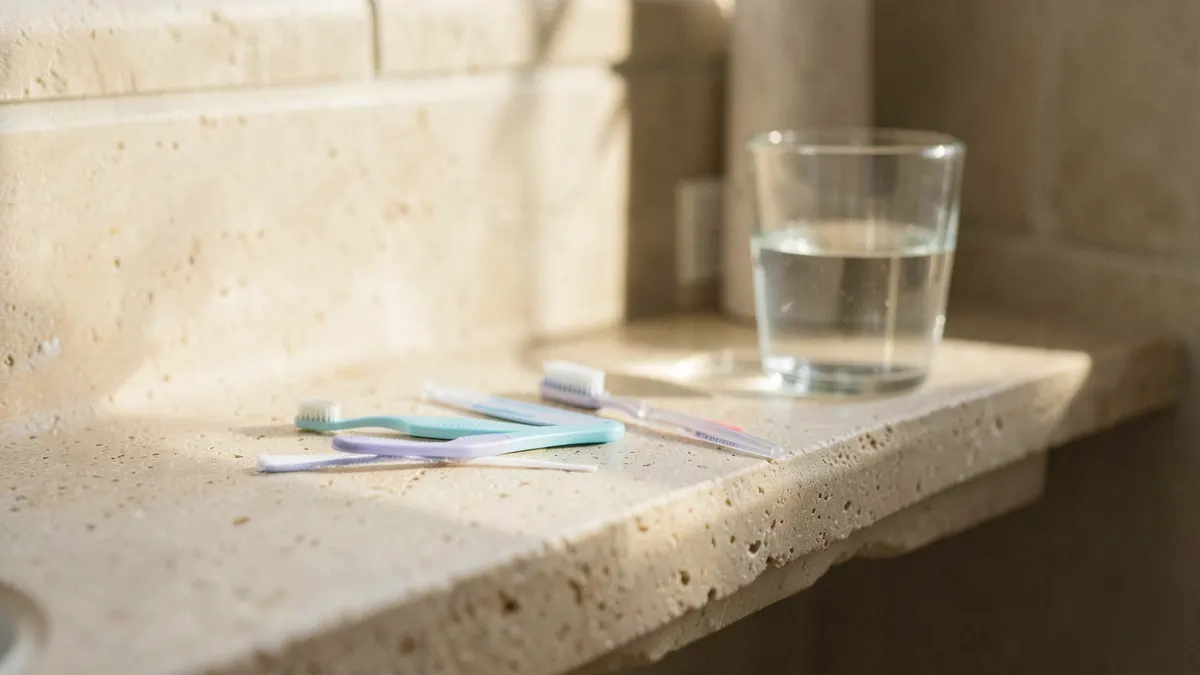
Use a soft brush and fluoride toothpaste. Angle the bristles toward the gumline and use small circles, because that is where plaque piles up on a crowned tooth. Floss every day. If the contact is tight, a floss threader helps.
A crown looks smooth, but the margin where cap meets tooth is the weak spot. A cavity there goes unnoticed without X-rays, so keep your regular cleanings on the calendar.
Foods and drinks that cause trouble
Hard foods can chip porcelain or loosen cement. Ice, hard candy, and unpopped popcorn kernels are the usual culprits. Sticky candy can tug at the edge.
Coffee, tea, red wine, and curry can stain the natural teeth around the crown. The crown itself resists stains, but a darker neighbor makes it stand out. Cleanings keep the contrast small.
Protecting the crown from your habits
Do you wake with a sore jaw? Grinding or clenching presses on a crown all night. A custom night guard spreads that load. If you play contact sports, a custom mouthguard is worth having made. Both are cheap compared with a cracked crown.
And do not use your teeth to open packages. Crowns are strong, but not that strong.
A simple yearly rhythm
Cleanings and exams twice a year, or as your dentist advises, let us check the fit and the margin. X-rays once in a while show what the eye cannot. Most crown problems are small when found early.
What normal looks like
A new crown can feel slightly tall for a day or two, and the gum around it may be tender while it settles. Cold can bother the tooth for a short while. These usually fade.
Call us if the bite feels high and stays that way, if the pain throbs or wakes you at night, or if the crown feels loose. A small bite adjustment takes minutes, and it is better done early than after a year of uneven pressure.
Keep a spare minute in your routine for a quick look in the mirror. Check the gum line for redness, and run your tongue over the edge to feel for roughness. Small changes are worth mentioning at your next visit.
Questions patients ask
Can a crown get a cavity?
The crown itself cannot, but the tooth under it can, especially where the cap meets the gum. Careful brushing and flossing at that edge protect it.
What should I do if my temporary crown comes off?
Call the office the same day. Keep the crown if you can, avoid chewing on that tooth, and do not use household glue.
Something feel loose or look off? Call (561) 338-6411 or book online.
This article is general information, not a diagnosis. Call us to talk about your own teeth.