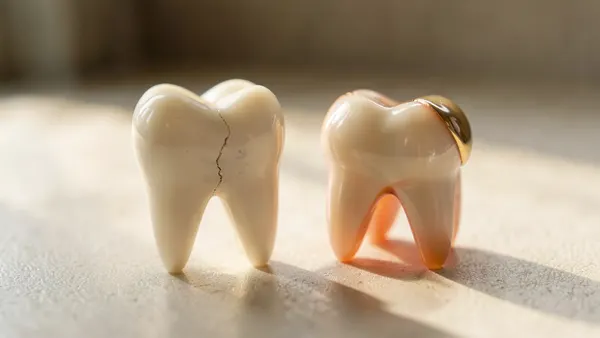
Chipped or cracked crown: can it wait for a regular visit?
A crown that chips is not always an emergency, and one that cracks is not always minor. The first day comes down to sorting which kind you have, then protecting the tooth underneath.
Step 1: Look and feel, gently
Check in a mirror. Is the crown cracked, chipped, wobbly or gone entirely? Does the tooth hurt, and does anything feel sharp against your tongue? Those answers are the first thing the office will ask, so note them.
Step 2: Call the office and describe it
A small chip with no pain may be fine until a routine visit. Pain, swelling, a loose crown, or a rough edge that cuts your tongue deserves a faster response. Our team will tell you how soon to come in. The same goes if the crown fell off completely. See our emergency dentist page for how we handle urgent cases.
Step 3: Save the crown
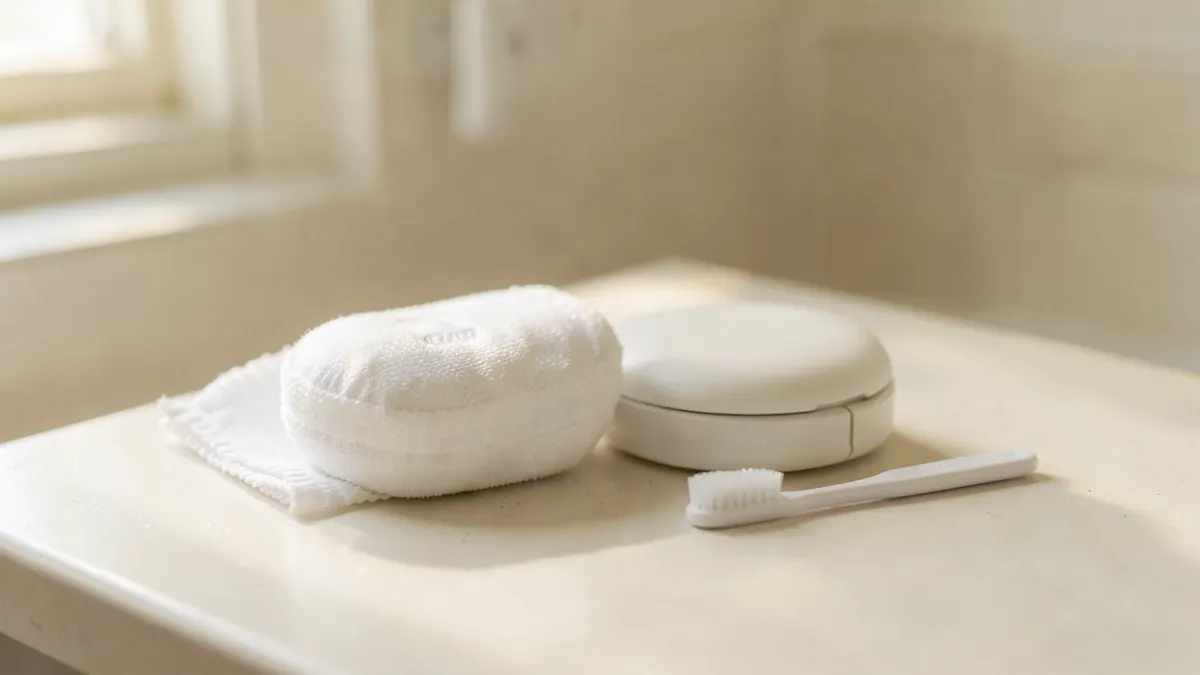
If it came off, rinse it, dry it and keep it somewhere safe, such as a clean container. Bring it with you. Do not use household glue. Pharmacies sell dental cement made for the mouth, and it can hold the crown in place for a short time. Treat it as a stopgap only, because the tooth under the crown still needs a look.
Step 4: Protect the tooth until the visit
- Chew on the other side.
- Stick to soft foods for now.
- Rinse gently with water after meals.
- For discomfort, an over-the-counter pain reliever may help; follow the label.
What the dentist checks
Expect an exam of both the crown and the tooth beneath it, and probably an X-ray to look for decay or a crack under the surface. Then comes the decision. A minor chip can sometimes be smoothed. A crown that is cracked through, or a tooth that has changed shape, usually means a new one. A temporary crown may cover the tooth while the replacement is made, or the replacement may be made in the office if your tooth suits CEREC.
Why crowns fail in the first place
Common causes are chewing ice or hard candy, clenching or grinding, a knock to the face, and decay creeping in at the edge. If you grind at night or play contact sports, ask about a guard. Keep brushing and flossing, since the tooth under a crown can still decay.
What not to do
Do not test the loose crown by wiggling it, and do not bite down on it to "seat" it. Do not use super glue or any household adhesive, which can harm the tooth and gums. Skip very hot or very cold drinks if the tooth is sensitive, and avoid alcohol-based mouthwash on an exposed tooth, since it can sting.
If you have swelling in your face, a fever, or trouble swallowing or breathing, treat it as more than a dental problem and seek urgent medical care.
If your crown has broken, call (561) 338-6411 or book online. Tell us it is urgent.
After the repair, ask the dentist why it failed. The answer, whether it was a hard bite, a grinding habit or decay at the edge, tells you how to keep the next crown safe. Write it down while it is fresh.
Questions patients ask
Should I glue my crown back on myself?
Pharmacy dental cement can hold a crown in place briefly, but it is only a short-term measure. Keep the crown clean and see your dentist soon, since the tooth underneath needs to be checked.
Is a chipped crown an emergency?
A small chip without pain can often wait for a regular visit. Pain, swelling, a loose crown or a sharp edge should be seen quickly, so call the office and describe what you notice.
This article is general information, not a diagnosis. Call us to talk about your own teeth.