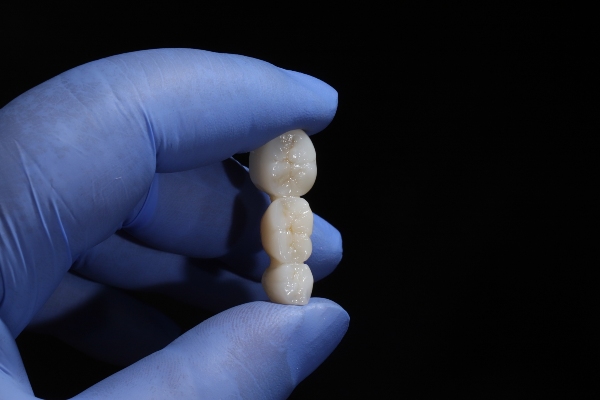
 Dental crowns are an effective solution for restoring damaged and decayed teeth. They protect the tooth from further damage while enhancing its appearance, blending in with the rest of your smile. However, it can be difficult to choose between the many types of crowns, such as porcelain and metal, as each of these materials has its benefits and drawbacks. Understanding these differences can help you decide which one is right for you and your unique needs.
What are dental crowns?
Dental crowns are custom-made small caps that cover a damaged tooth, restoring its shape, strength, and appearance. They are cemented into place, fully encasing the visible portion of the tooth above the gum line. While crowns can contain various materials, porcelain, and metal are among the most popular choices.
Porcelain dental crowns
Aesthetics
Porcelain crowns offer a more natural appearance than metal crowns. They are made with several layers of biocompatible porcelain and are color-matched to a patient's surrounding natural teeth. This makes them an effective option for front teeth or other highly visible areas. Additionally, porcelain dental crowns mimic the light-reflecting properties of natural teeth, which makes them more aesthetically pleasing than other dental crown materials.
Durability
While porcelain crowns are durable, they are not as strong as metal crowns. They are more prone to chipping or cracking, particularly for patients who have a habit of grinding their teeth (bruxism) or if they frequently chew on hard objects. Some dental professionals have begun to use crowns that combine porcelain and zirconia; zirconia is a durable ceramic that can also be color-matched to a patient's teeth. Porcelain-zirconia crowns are stronger than traditional ones and are ideal for those concerned about their crown's durability and everyday wear and tear.
Cost-effectiveness
Metal crowns are generally more cost-effective than porcelain crowns. They often contain alloys that combine metals like gold, platinum, or base metal alloys. While gold crowns can be more expensive, base metal alloy crowns are typically more affordable.
Metal dental crowns
Strength and durability
Metal crowns are known for their exceptional strength and durability. They can withstand significant biting and chewing forces without chipping or breaking, making them ideal for molars or teeth subjected to heavy use. As a result, metal crowns typically have a longer lifespan than porcelain crowns. They are more resistant to everyday wear and tear and are less likely to require replacement over time.
Cost-effectiveness
Metal crowns are generally more cost-effective than porcelain crowns. They are often made from alloys that combine metals like gold, platinum, or base metal alloys. While gold crowns can be more expensive, base metal alloy crowns are typically more affordable.
Appearance and aesthetic issues
The primary drawback of metal crowns is their appearance. They do not blend in with natural teeth and are easily noticeable, making them a less suitable option than other crown materials. Dentists often recommend metal crowns for the back teeth (molars) where their appearance is less of a concern.
Learn more about our dental crown options
Porcelain and metal dental crowns each have their own unique benefits and drawbacks. At Boca Dental Group, we offer a variety of dental crown materials in the Boca Raton area. Would you like to learn more about our options? Call our office to schedule a consultation.
Request an appointment or call Boca Dental Group at 561-325-7927 for an appointment in our Boca Raton office.
Related Posts
Silver amalgam dental crowns are among the most well-known dental restorations. However, there are other crown options. A general dentist can restore damaged, decayed teeth in patients with metal allergies through a variety of non-metal dental crowns.According to the American Academy of Allergy, Asthma & Immunology, nickel allergies are the most common metal allergies in…
Oral health involves keeping the teeth functional and healthy for as long as possible, and a dental crown is one way to do this after a tooth has been damaged. Damage does not necessarily equate to losing a tooth, though it can if treatment does not occur quickly enough. Fortunately, a dental crown is simple…
Dental crowns are often used to cover chipped or decayed teeth so as to restore their form and function. If tooth damage is too severe to be handled with dental fillings, the dentist will typically recommend getting crowns. Dental crowns might be made of porcelain, metal, ceramics, or resin. No special care is required, except…