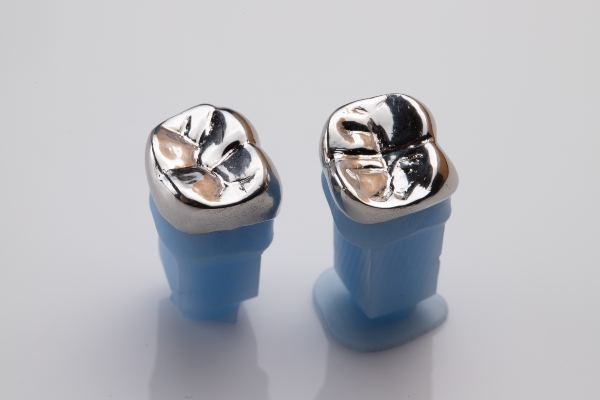
 Silver amalgam dental crowns are among the most well-known dental restorations. However, there are other crown options. A general dentist can restore damaged, decayed teeth in patients with metal allergies through a variety of non-metal dental crowns.
Known metal allergies and dental crowns
According to the American Academy of Allergy, Asthma & Immunology, nickel allergies are the most common metal allergies in the United States. Those with a nickel allergy develop a skin rash following exposure to this common, otherwise harmless metal. Medically, this allergic reaction is known as contact dermatitis. It is the same skin reaction that results from exposure to poison ivy.
Always tell the general dentist about any known nickel or metal allergies. No metal crown is 100% one type of metal. For example, silver crowns are not pure silver. Rather, metal crowns are an amalgamation of several metal types, and thus, many contain some nickel.
Unknown but suspected metal allergies
Patients who suspect they may have a metal allergy should inform the dentist before receiving a dental crown. Doing so can prevent the patient from experiencing an uncomfortable allergic reaction. Common crown allergy symptoms include but are not limited to:
- Inflamed, itching, or burning gums
- Contact dermatitis in and around the mouth
- Swollen lymph nodes
There is no need to panic if these symptoms arise, however. A general dentist can replace the metal crown with a non-metal one. Informing the dentist of a suspected metal allergy ahead of time can simply prevent the need for this.
Non-metal dental crowns
Non-metal dental crowns include porcelain, pressed ceramic, and all-resin crowns. Not only are all of these crowns completely free of metal, but they also have a natural tooth appearance. General dentists design them to match the color and opacity of the surrounding teeth. Take a better look at these options below.
Porcelain dental crowns
Porcelain, or all-ceramic, crowns are a popular choice for dental crowns because they closely match the appearance of natural teeth. They are also strong enough to restore bite force and chewing ability. Note that porcelain crowns can contain various materials, the most common being zirconium dioxide.
Pressed ceramic dental crowns
Pressed ceramic crowns are a viable alternative to porcelain-fused-to-metal (PFM) crowns, making them effective premolar and molar restorations. With PFM crowns, the hard metal center is coated in porcelain, delivering a highly durable but natural-looking restoration. Pressed ceramic crowns have a similar design for the same reason — the only difference is that they have a durable core made of ceramic layers instead of metal.
All-resin dental crowns
All-resin crowns consist of composite resin, the same non-metal material used to fill cavities. Thus, they are typically only used as temporary crowns. Still, with proper care, they can last up to five years.
Get a dental crown safe for patients with metal allergies
Metal crowns are common, but there are other options. If you need a dental crown and have a known or suspected metal allergy, general dentists have non-metal options to choose from. Non-metal crowns are also available to patients without metal allergies. Contact Boca Dental Group to learn more in an appointment.
Request an appointment or call Boca Dental Group at 561-325-7927 for an appointment in our Boca Raton office.
Related Posts
Oral health involves keeping the teeth functional and healthy for as long as possible, and a dental crown is one way to do this after a tooth has been damaged. Damage does not necessarily equate to losing a tooth, though it can if treatment does not occur quickly enough. Fortunately, a dental crown is simple…
Dental crowns are often used to cover chipped or decayed teeth so as to restore their form and function. If tooth damage is too severe to be handled with dental fillings, the dentist will typically recommend getting crowns. Dental crowns might be made of porcelain, metal, ceramics, or resin. No special care is required, except…
A dental is one of the most commonly applied prosthetic devices in dentistry. In fact, according to the International Journal of Environmental Research and Public Health, about one in three people over the age of 19 has at least one dental crown. This cap forms the new biting surface of a tooth and is used…